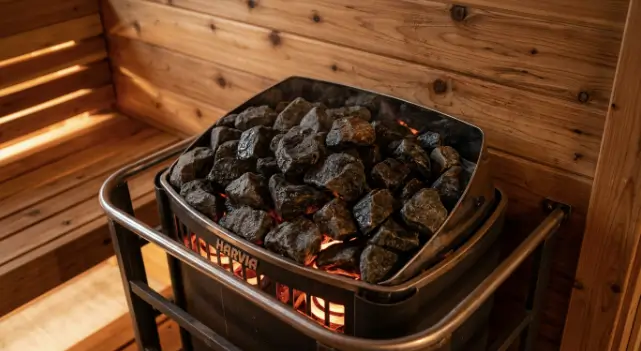
Choosing between cedar and heat-treated hemlock for the cabin around an electric sauna heater comes down to budget and finish preference more than performance. Western red cedar resists moisture and insects naturally, releases very little resin once hot, and typically costs 20 to 40 percent more than heat-treated hemlock, which strips resin through a controlled kiln process instead of relying on the wood’s natural chemistry. Either species performs well next to an electric heater as long as it is properly dried and installed to the heater’s specified clearances.
Step One: Understand What Each Wood Actually Is
Western red cedar is a naturally rot- and insect-resistant softwood that has been the default sauna material for decades because it barely off-gasses resin once it reaches sauna temperatures, which keeps the air breathable and the wood surface comfortable to sit on. Heat-treated hemlock starts as an ordinary softwood and goes through a kiln process, typically several hours at high heat, that drives out moisture and resin and darkens the wood slightly in the process. The result is a stable, low-resin board that behaves a lot like cedar in daily use but at a lower material cost, since hemlock itself is a cheaper raw material before treatment.
Step Two: Check How Each Reacts Near the Heater
The panels and benches closest to an electric heater see the most direct heat cycling in the cabin, so this is where wood quality matters most. Properly treated hemlock should show no resin bleed and no warping once it has been through a few dozen heat cycles near the guard rail. Cedar handles the same stress with even less variability, since its natural oils are largely gone by the time the board is milled and kiln-dried for sauna use. Poorly treated hemlock, on the other hand, sometimes still carries enough residual moisture to warp slightly in the first season, which is the main complaint buyers report when they choose a bargain hemlock kit from an unclear supplier.
Step Three: Verify the Drying and Treatment Process
Before buying either species, ask the seller what kiln temperature and duration the wood went through and whether it is being sold as sauna-grade or general construction lumber. Sauna-grade wood is specifically dried to a lower moisture content than framing lumber, which matters because a cabin panel that still holds construction-grade moisture will shrink and gap once the heater starts running regularly. A reputable listing states the wood grade and drying process directly rather than using vague language like “premium wood,” and that clarity is one of the more reliable signs of a well-built kit versus an import assembled from mixed-grade stock.
Step Four: Match the Panel Thickness to the Heater
Wood species does not change how big a heater the room needs, but panel thickness and joint quality do. A cabin built from thin, gappy paneling loses heat fast regardless of whether it is cedar or hemlock, which can force the heater to run at a higher output than its rated kilowatt figure would suggest is necessary for the room’s cubic footage. Tongue-and-groove construction with tight joints and no exposed interior fasteners holds heat far better than butt-jointed boards, and that construction detail affects the heater’s workload more than the species choice does.
Step Five: Compare Total Cost, Not Just Board Price
Cedar’s higher per-board-foot cost is usually offset somewhat by needing less finishing over the cabin’s life, since it resists staining and mildew on its own. Heat-treated hemlock costs less up front and performs comparably well if the treatment was done properly, which makes it a reasonable choice for a buyer working with a tighter budget on the wood package while spending more on the heater itself. Either way, price the wood and the heater as one system rather than shopping them separately, since a well-built cabin with a mid-tier heater usually outperforms a premium heater bolted into a poorly sealed box. A side-by-side spec comparison, including what https://sweatdecks.com lists for cabin and heater packages, is a useful way to see how sellers bundle wood grade with heater output before making a final call.
Step Six: Decide Whether to Finish the Wood at All
Most sauna interiors, cedar or hemlock, are left completely unfinished, no stain, no sealant, no varnish. This is intentional, not an oversight: finishes and sealants can off-gas or soften once the wood reaches sauna temperatures, which is both an air quality concern in an enclosed space and a fire safety issue near the heater. If a finish is used at all, it belongs on the exterior of an outdoor cabin, not the interior, and it should be a product rated specifically for high-heat exposure rather than a general-purpose deck stain. Bare, untreated wood also ages more predictably, darkening slightly and developing a smooth patina over years of use, which most owners come to prefer over a finished look anyway. Anyone shopping a kit that advertises a “sealed” or “finished” interior should ask specifically what product was used and whether it is rated for direct proximity to an electric heating element.
Step Seven: Consider What the Research Says About Regular Use
None of the wood choice changes the underlying appeal of a sauna, which research has looked at fairly closely. A 2001 review in The American Journal of Medicine covered both the benefits and the genuine risks of regular sauna bathing, including cautions for people with certain cardiovascular conditions. A systematic review in Evidence-Based Complementary and Alternative Medicine reported associations between regular dry sauna use and favorable markers across several studies, and a 2023 review in Mayo Clinic Proceedings examined how sauna bathing combined with other healthy habits correlates with additional benefit. These findings describe population-level associations from mostly Finnish research, not a guarantee tied to any specific wood species or heater brand.
Frequently Asked Questions
Is cedar or heat-treated hemlock better around an electric heater? Both work well when properly kiln-dried. Cedar resists moisture and insects naturally; heat-treated hemlock achieves similar stability through processing, usually at a lower cost.
How do you check that hemlock has been heat-treated correctly? Ask for the kiln process details and look for wood that feels dry and light with no resin bleed once warmed near the heater.
Does the wood species affect heater sizing? Not directly. Panel thickness and insulation quality matter more and can push the required heater size up if the cabin is poorly sealed.
How close can wood benches sit to an electric heater? Follow the manufacturer’s clearance spec, typically 2 to 4 inches, regardless of wood species.
References
- Benefits and risks of sauna bathing, The American Journal of Medicine, 2001
- Clinical Effects of Regular Dry Sauna Bathing: A Systematic Review, Evidence-Based Complementary and Alternative Medicine, 2018
- Does the Combination of Finnish Sauna Bathing and Other Lifestyle Factors Confer Additional Health Benefits? A Review of the Evidence, Mayo Clinic Proceedings, 2023
By Marcus Overby